It can be frustrating when your baby won’t stop crying. Or when your baby is sick and is fussy. But no matter how fed up, tired, or upset you are, you should never shake, hit, throw, or drop your baby.
Read more about the head injuries this can cause and ways to manage your frustration when baby is fussy.
How head injuries can happen
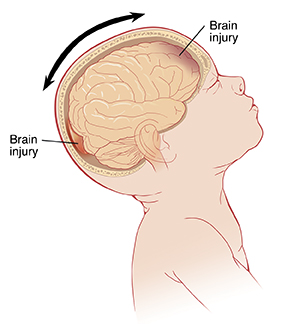
A baby's neck muscles can't support the stress of shaking. When a baby is shaken, hit, thrown, or dropped, the brain moves back and forth inside the skull. Even a little force can cause brain bleeding and swelling inside a baby's head. This can lead to permanent brain damage, learning disabilities, intellectual disability, blindness, deafness, seizures, paralysis, coma, or even death. Babies who survive this type of injury will likely need lifelong medical care.
If you are frustrated
Here are tips to keep your baby safe when you feel frustrated that your baby won't stop crying. Share these tips with all of your baby's caregivers, including babysitters, family, and partners.
-
Understand that a baby's crying is worse in the first few months of life, but it will get better as they grow.
-
Put your baby down in a safe place, such as their crib, even if the baby is crying.
-
Take a deep breath. Walk away. Count to 10. Do whatever else you need to do to calm down.
-
Let others help you take care of the baby. Trade off with your partner, your baby’s grandparents, or other family members.
-
Make sure your baby is fed and dry. Feed your baby slowly and burp them often. Sing or talk softly to your baby. Rock your baby gently or go for a walk. Hold your baby against your bare skin (skin-to-skin). Take your baby for a ride in a stroller or car.
-
Talk with your baby’s doctor about what’s causing the crying. There could be a health problem or other issue that’s making your baby cry more than normal. The doctor can also give you ideas for how to console your crying baby.
-
If your baby’s doctor thinks your baby is just fussy, know that this is not your fault. Your baby will grow out of this period of fussiness. It does not mean your baby does not love you, or that you are not doing a good job. Healthy babies can cry for 1 to 2 hours at a time.
-
If you’re feeling overwhelmed, talk with your baby’s doctor about childcare options, counseling, or other resources that can help.
-
Call Childhelp at 800-422-4453. The trained Childhelp counselor can help you deal with your frustration, so you don’t hurt your baby.
-
Never leave your baby alone with a person who is easily irritated, or has a temper or a history of violence.

Related Articles
Overview of Diagnostic Tests for Nervous System Disorders in Children
Evaluating and diagnosing damage to the nervous system can be complicated. Many of the same symptoms occur in different combinations among the different disorders, and many disorders do not have definitive causes, markers, or tests.
How Seizures Affect the Body
The brain is your body's control center. It manages everything from movement and balance to emotions and memory. When a seizure happens, some or all brain functions are temporarily affected.
Understanding Dandy-Walker Malformation
A Dandy-Walker malformation (DWM) is a birth defect of the brain. It means that the cerebellum doesn’t form the right way as a fetus develops.
Periventricular Leukomalacia (PVL) in the Premature Infant
Periventricular leukomalacia is softening of brain tissue near the ventricles.


