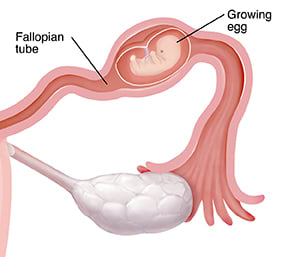
When a person becomes pregnant, a fertilized egg (ovum) attaches to the inside of the uterus (womb) where it grows. But in some cases, the egg can attach outside the uterus. This most often happens in a fallopian tube. This is called an ectopic pregnancy. You might also hear this called a tubal pregnancy. But the egg can attach in other places, too. These areas may include the ovary, cervix, or belly (abdomen). An ectopic pregnancy in these places is rare.
The egg growing in the fallopian tube can cause the tube to burst (rupture). This can lead to severe bleeding. It needs to be found early and treated right away.
What causes ectopic pregnancy?
Most often, there is a problem with the fallopian tube. This problem stops the egg from moving through it and into the uterus. This could be due to injury to the tube. This may be from an infection or surgery. A person's risk for an ectopic pregnancy can increase if they have had:
- An ectopic pregnancy in the past
- Pelvic infections that keep coming back
- Endometriosis
- Problems getting pregnant (infertility)
- Prior pelvic surgeries, particularly tubal surgery
- Damage or abnormalities to the tubes
- A pregnancy while using certain birth control pills or an intrauterine device
A person may also be at higher risk if they:
- Smoke
- Are over age 35
- History of sexually transmitted infections
- Use douches often
What are the symptoms of ectopic pregnancy?
The symptoms most often occur in the first 12 weeks of pregnancy. This is the first trimester. A person may first have symptoms of early pregnancy, such as:
- Missed menstrual period
- Sore breasts
- Need to pee often
- Feel sick in their stomach (nausea)
If the pregnancy is ectopic, symptoms may also include:
- Bleeding from the vagina
- Pain in the pelvis or lower back
The pain may:
- Come on quickly or slowly
- Be mild or severe
- Be dull or sharp
- Can come and go or last for a while
- Be only on one side
But in some cases, a person may have no symptoms.
As an ectopic pregnancy grows, symptoms may increase. If the tube bursts, the person may have:
- Severe, sudden pain in the abdomen or pelvis that does not go away
- Pain that travels to the shoulder
- Weakness and fainting
If an ectopic pregnancy bursts, it can lead to severe internal bleeding that can threaten the pregnant person's life. Treatment is needed right away.
What is the treatment for ectopic pregnancy?
An ectopic pregnancy can be treated in several ways. Treatment may include:
- Medicine. One or more doses of medicine may be injected. This is to stop the fertilized egg cells from growing. Then the body absorbs these cells. Hormone levels are tested at certain times. This testing is used to make sure that hormone levels have gone back to normal.
- Surgery. Surgery is done to remove part or all of the tube where the ectopic pregnancy is found. If a person shows signs that the tube might burst or has burst, they need surgery right away.
- Watchful waiting. This is only done with some people who are at a very low risk for rupture. It includes close checking of symptoms, hormone level testing, and ultrasound scans.

Related Articles
Established Pregnancy, Normal Symptoms
You are pregnant and are having symptoms that worry you. During pregnancy, it's normal to have many kinds of symptoms. Here is a list of common symptoms that happen during pregnancy.
Pelvic Pain in Pregnancy: Unclear (2–3 Trimester)
Mild pelvic pressure or heaviness is very common in the later stages of a healthy pregnancy. This is due to the growing uterus. Although the exact cause of your pain is not certain, it doesn't seem to be dangerous. Here's what you need to know about home care.
Pregnancy: Your First Trimester Changes
The first trimester is a time of rapid development for your baby. Read on to learn about all the changes.
Dizziness or Fainting During Pregnancy
Feeling dizzy or faint is very common during pregnancy. It generally does not mean something is wrong. It is most common during the first trimester, but it can happen anytime during pregnancy. Dizziness and fainting (syncope) are often caused by a drop in blood pressure. This is from the hormones released during pregnancy that relax the body's blood vessels. Too little blood is then pumped up to the brain. When this happens, you lose consciousness (faint). Fainting is not dangerous to you or your baby unless you fall and hurt yourself.


