Flexibility is the ability of a muscle to stretch and increase its length. Doing this exercise will help stretch the muscles in your shoulders. This can help restore your range of motion and prevent injury.
-
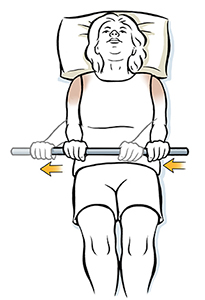
Lie on your back on a bed or the floor, with your arms at your sides. Bend your arms at a 90-degree angle. Hold a stick or cane in front of you with both hands facing palms down. Keep your upper arms close to your body.
-
Slowly push the stick or cane to the right with your left hand until you feel a pull without pain. Keep holding onto the stick or cane with both hands. Keep your elbows close to your body to make sure they stay bent. Feel your right shoulder stretch. Stop at the point of discomfort. Hold for 5 seconds.
-
Slowly move your arms back. Relax.
-
Repeat on the left side, if instructed.
-
Repeat
5 times.
Author: Wheeler, Brooke
© 2000-2026 The StayWell Company, LLC. All rights reserved. This information is not intended as a substitute for professional medical care. Always follow your healthcare professional's instructions.

Related Articles
Back Safety: Sitting
Sitting can strain your back if you don't do it right. Learn the right moves to protect your back.
The Side-Bend Stretch: A Gentle Exercise
Follow these step-by-step instructions for the side-bend stretch. This exercise stretches and strengthens the intercostal muscles, which help support the ribs.
Standing with Crutches (Non-Weight Bearing)
These images show you how to stand using crutches.
Back Safety: Poor Posture Hurts
An unhealthy spine often starts with bad habits. Poor movement patterns and posture problems are common causes of back pain. Disk, bone, nerve, and soft tissue problems can all be affected by poor posture.


