The best treatment for you will depend on the type of incontinence you have. Your symptoms, age, and any other problems that are found also affect your treatment. Some types of incontinence may, over time, require surgery. But nonsurgical treatments may work well in many cases. These treatments include lifestyle changes, muscle-strengthening exercises, and medicines.
Nonsurgical treatments
Treatment for stress urinary incontinence includes:
-
Bladder training, such as urinating on a schedule.
-
Lifestyle changes, such as weight loss and increased activity if incontinence is due to being overweight.
-
Medicines, if bladder training has not helped. Medicines may relax the bladder and increase the amount it can hold.
-
Pelvic floor muscle exercises.
-
Medical devices such as a pessary and electrical nerve stimulation.
Lifestyle changes
These changes may include:
-
Losing weight. Excess weight puts extra pressure on the pelvic floor muscles. Exercising and eating right can help you lose weight. This helps other treatments work better.
-
Making certain changes in your diet. Some foods may make you need to urinate more, so it may be good not to have them. These include caffeinated drinks and alcohol. If you have constipation, it can make incontinence worse. In that case, your health care provider may recommend that you eat more fiber. Ask your provider if these or other changes in your diet might be helpful.
-
Quitting smoking. Smoking can lead to a long-term (chronic) cough that strains pelvic floor muscles. Smoking may also damage the bladder and urethra.
Pelvic floor muscle exercises
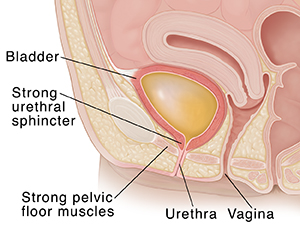
There are exercises you can do to help strengthen your pelvic floor muscles. The pelvic floor muscles act as a sling to help hold the bladder and urethra in place. These muscles also help keep the urethra closed. Weak pelvic floor muscles may allow urine to leak. To strengthen the pelvic floor muscles, do the specific exercises daily as instructed. In a few months, the muscles will be stronger and tighter. This can help prevent urine leakage.

Related Articles
Treating Urinary Incontinence: Urethral Implants
Urethral implants (bulking agents) are one way to help treat incontinence due to a weak sphincter. Read on for details.
Continent Urinary Diversion
Continent urinary diversion is surgery to make a new way for urine to pass out of the body. During the surgery, either a new bladder (neobladder) or a pouch is created. This is done using a piece of your own intestine (bowel). Learn about the details of this procedure.
Lithotripsy
Lithotripsy is a procedure used to treat kidney stones that are too large to pass through the urinary tract. It works by sending focused ultrasound energy or shock waves directly to the stone. The shock waves break a large stone into smaller stones that will pass through the urinary system.
Robotic Pyeloplasty
Robotic pyeloplasty is a surgery that is done to fix a blockage (obstruction) where the kidney connects to the ureter.


