Home recovery
-
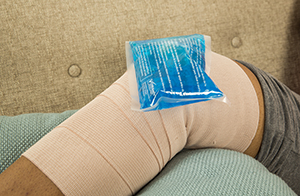
Put a bag of ice or an ice pack on your knee. Wrap the ice in a thin towel or place it on top of the bandage to protect your skin. Or your healthcare provider may recommend using a cold therapy device. Raise your knee above heart level.
-
Your healthcare provider may tell you not to put weight on your knee. Use a cane, crutches, or walker as directed.
-
Your healthcare provider may also give you pain medicines, anti-inflammatory pills, or both.
-
To prevent infection, keep your incisions dry. Use a plastic bag when icing your knee or taking a shower. Follow your healthcare provider's instruction on how long to wait before showering or bathing.
Strengthening your knee
You may be told to do exercises. You may need to use weights or resistance bands. To help make your knee stronger and prevent injuries, follow these tips:
-
Start out slowly. Then add repetitions or duration as advised.
-
Take short, frequent walks each day. Ask your healthcare provider when you can start, how long your walks should be, and how often you should take them.
-
Go to physical therapy, if advised. It can help you make your knee stronger. It can also improve your knee's range of motion.
-
Increase any exercise you do as approved by your healthcare provider or physical therapist.
At home, you play a major role in your recovery. The better you care for your knee, the faster you may heal. And the faster you heal, the sooner you can get back to your normal activities. Follow your healthcare provider’s instructions about how to care for your knee after surgery.
Take note
Talk with your healthcare provider about what exercise program is best for you. Always tell your healthcare provider if an exercise causes new or lasting pain.
Featured in
Online Medical Reviewer: Rahul Banerjee MD
Online Medical Reviewer: Raymond Turley Jr PA-C
Online Medical Reviewer: Stacey Wojcik MBA BSN RN
Date Last Reviewed: 09/01/2025
© 2000-2026 The StayWell Company, LLC. All rights reserved. This information is not intended as a substitute for professional medical care. Always follow your healthcare professional's instructions.

Related Articles
Crutch Walking
A helpful, step-by-step guide to walking with crutches, including going up and down stairs.
"Reaching Up" for Shoulder Flexibility
Here is a stretch for frozen shoulder.
Knee Immobilizer
A knee immobilizer is a type of brace used to provide support and limit movement of the knee. Here's what you need to know as you heal at home.
Shoulder Immobilizer
A shoulder immobilizer is designed to hold your arm against your body. It is used for injuries where you need to limit how much you can move your shoulder. These injuries include a shoulder dislocation or shoulder fracture. Moving your shoulder too much could cause harm.


