Pushing can be hard on your back. Pulling can be even harder. So, push rather than pull when you can. Follow the tips on this sheet to help protect your back.
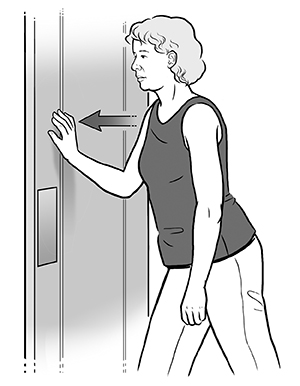
Pushing a light object
-
Bend your knees slightly. Keep your ears, shoulders, and hips in line.
-
Tighten your stomach muscles.
-
Lean in slightly toward the object you’re pushing.
-
Use your legs and the weight of your body to move the object.
-
Take small steps.
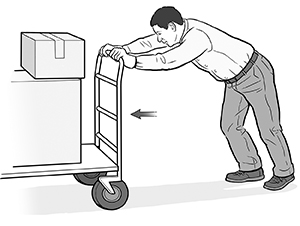
Pushing a heavy object
-
Tighten your stomach muscles.
-
Bend your knees.
-
Lean in toward the object you’re pushing. The heavier the object, the more you should lean.
-
Try not to hunch your back. Keep it straight.
-
Use your legs and the weight of your body to move the object.
-
Take small steps.
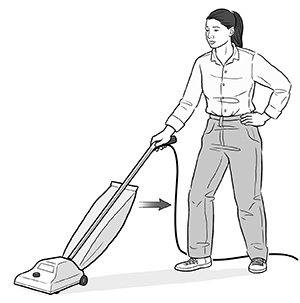
Pulling
-
Face the object you’re pulling.
-
Tighten your stomach muscles.
-
Keep your knees slightly bent.
-
Step backward and pull the object with you.
-
Don’t twist your body. If you’re using one hand, putting the other hand on your hip can help keep you from twisting.
-
When pulling heavy objects, lean back, and bend at the knees and hips. Keep your arms straight. Let your body weight pull the load.
Online Medical Reviewer: L Renee Watson MSN RN
Online Medical Reviewer: Raymond Turley Jr PA-C
Online Medical Reviewer: Thomas N Joseph MD
Date Last Reviewed: 08/01/2022
© 2000-2026 The StayWell Company, LLC. All rights reserved. This information is not intended as a substitute for professional medical care. Always follow your healthcare professional's instructions.

Related Articles
Crutch Walking
A helpful, step-by-step guide to walking with crutches, including going up and down stairs.
Knee Immobilizer
A knee immobilizer is a type of brace used to provide support and limit movement of the knee. Here's what you need to know as you heal at home.
Shoulder Immobilizer
A shoulder immobilizer is designed to hold your arm against your body. It is used for injuries where you need to limit how much you can move your shoulder. These injuries include a shoulder dislocation or shoulder fracture. Moving your shoulder too much could cause harm.
Plaster Splint Care
Here are directions to care for your splint at home.


